
Iron Infusion Side Effects: What to Expect and How to Manage Them Naturally
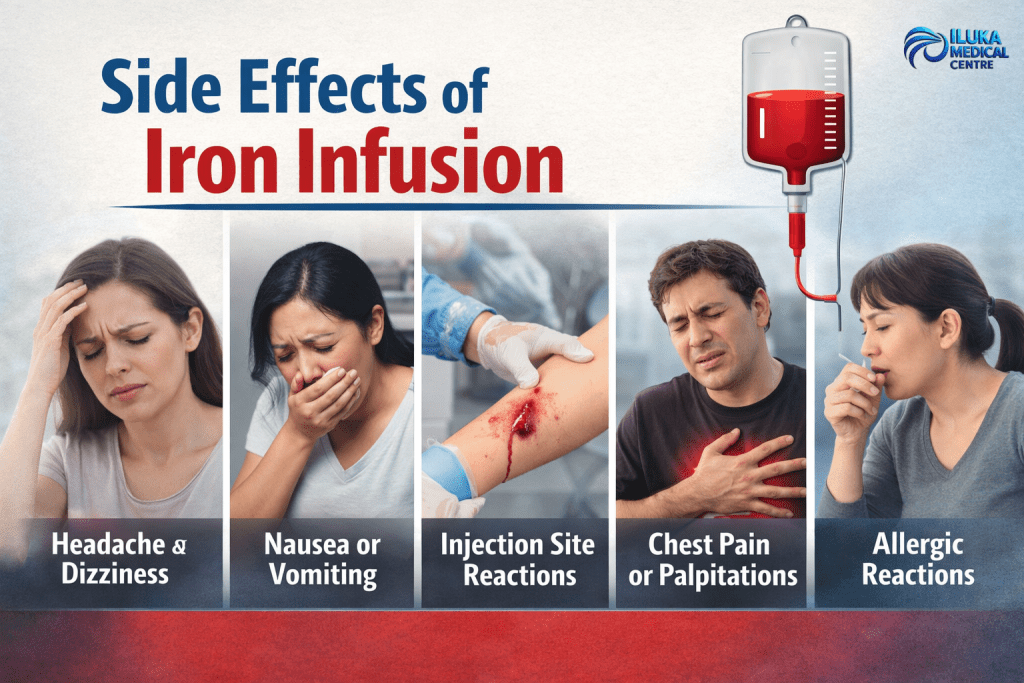
Have you been advised to get an iron infusion? It’s completely natural to wonder about iron infusion side effects, especially when it involves a treatment delivered directly into your bloodstream.
Most patients ask the same questions: Is iron infusion safe? Will I feel unwell? What should I expect afterwards?
The reality is that modern IV iron therapies are widely used and clinically proven to be safe, effective, and well-tolerated. In most cases, side effects of iron infusion are mild, short-lived, and manageable, particularly when the procedure is performed under proper medical supervision. Serious reactions are rare in clinical settings.
Understanding iron infusion risks, how your body responds, and how to manage any symptoms can make a significant difference in your comfort and confidence before and after treatment.
This guide explains the most common and rare iron infusion side effects. Inside, you’ll also learn practical ways to manage them, how long they typically last, and when it’s important to seek medical advice.
Continue reading to feel fully prepared, reassured, and in control of your iron infusion journey.
What Is an Iron Infusion?
An iron infusion is a treatment where iron is delivered directly into your bloodstream through an intravenous (IV) drip. It allows your body to restore iron levels quickly and effectively.
IV iron therapy is commonly recommended when iron levels are significantly low. Or when oral supplements are not effective or well tolerated. Iron infusions are often used for:
- Iron deficiency anaemia
- Ongoing fatigue linked to low iron levels
- Pregnancy-related iron deficiency
- Conditions that affect iron absorption
Unlike oral supplements, IV iron bypasses the digestive system. It means it works faster and is often better absorbed. Many patients begin to notice improvement in their symptoms within days to weeks.
Is Iron Infusion Safe?
Yes, iron infusions are considered safe, effective, and widely used, especially when performed by qualified medical professionals in a clinical setting.
As discussed earlier, modern IV iron therapies have a strong safety profile. According to Healthdirect Australia, most iron infusion side effects are mild and temporary. Serious reactions are rare—with severe allergic reactions occurring in fewer than 1 in 100 cases.
Importantly, modern IV iron infusion therapies continue to demonstrate strong safety outcomes, with moderate to severe reactions occurring in less than 1% of patients. This reinforces their reliability when administered correctly.
While iron infusions are safe, it’s still important to understand the common side effects you may experience.
Common Iron Infusion Side Effects (What Most Patients Experience)
Most side effects caused by iron infusion are mild, temporary, and manageable. Australian clinical guidance shows that injection site reactions occur in around 1.6% of patients. This figure makes them uncommon and generally mild.
The most common iron infusion side effects include:
- Headaches
- Nausea
- Light-headedness or dizziness
- Muscle cramps or aches
- Fatigue
- Mild fever or chills
- Flushing (a warm sensation)
- Soreness at the injection site
These symptoms typically develop within a few hours after the infusion. And they settle within one to two days as your body adjusts. Being aware of these common side effects of iron infusion can help you feel more prepared, reassured, and in control of your recovery.
While these are the most common reactions, some patients may experience less frequent side effects.
Less Common Iron Infusion Side Effects
Some side effects are less common but can still occur. Less common iron infusion side effects include the following:
- Low blood pressure during or shortly after the infusion
- Skin staining at the injection site (if leakage occurs)
- Metallic taste in the mouth
- Mild swelling or irritation
These effects are generally not serious but should be reported if they persist.
If any of these symptoms occur or continue, it’s important to inform your doctor. Large-scale clinical data shows that overall infusion-related adverse reactions occur in approximately 3.9% of cases, and most of these are mild and manageable.
Although uncommon side effects are usually mild, it’s also important to understand the rare but serious reactions.
Rare but Serious Iron Infusion Side Effects (When to Seek Urgent Care)
Serious iron infusion side effects are very rare, but recognizing them early is important. Rare but serious iron infusion side effects include:
Seek urgent care if you experience:
- Allergic reactions (rash, swelling, itching)
- Shortness of breath
- Chest pain or tightness
- Rapid or irregular heartbeat
- Severe dizziness or fainting
These symptoms require immediate medical attention. Seek urgent care if you experience any of the,
Now that you understand the possible risks, the next question is how long these side effects usually last.
How Long Do Iron Infusion Side Effects Last?
Iron infusion side effects typically last from a few hours to 1–2 days. Muscle aches may last a few days, while skin staining can last longer but is uncommon and preventable.
Here’s what to expect:
- Mild symptoms: a few hours to 1–2 days
- Muscle or joint aches: may last a few days
- Skin staining: can last longer but is rare
If your symptoms persist, worsen, or feel unusual, it’s best to consult your GP for advice.
Understanding how long side effects last is helpful. Next, let’s look at how you can manage them effectively.
How to Manage Iron Infusion Side Effects Effectively
Here are the most effective ways to reduce discomfort after your treatment:
Prioritise Rest and Recovery
Your body needs time to adjust and rebuild iron levels after the infusion. Taking it easy on the day of your treatment helps reduce fatigue, headaches, and muscle aches.
- Avoid strenuous activities or exercise
- Plan a relaxed day with light tasks
- Allow yourself time to rest or nap if needed
Stay Well Hydrated
Drinking enough fluids supports your body in processing iron efficiently and can help reduce symptoms like headaches, dizziness, and fatigue.
Aim to drink water regularly before and after your infusion to stay properly hydrated.
Manage Mild Pain or Discomfort
It’s common to experience mild aches, headaches, or general discomfort after an iron infusion. These symptoms are usually temporary and easy to manage.
- Use doctor-approved pain relief such as paracetamol
- Apply a warm compress to sore areas
- Rest and avoid overexertion
Eat Light and Balanced Meals
Some patients may feel slightly nauseous after treatment. Eating light, easy-to-digest meals can help settle your stomach.
- Choose simple, balanced foods
- Avoid heavy or greasy meals
- Try ginger tea or peppermint to ease nausea
Protect the Injection Site
Mild swelling, bruising, or tenderness at the injection site can occur. Proper care helps prevent irritation or complications.
- Avoid touching or applying pressure to the area
- Monitor for redness, swelling, or discomfort
- Contact your doctor if symptoms worsen
Move Slowly to Avoid Dizziness
Feeling light-headed after an infusion is not uncommon. Moving carefully can help prevent falls or discomfort.
- Stand up slowly from sitting or lying down
- Avoid sudden movements
- Sit or lie down if you feel dizzy
Follow Your Doctor’s Advice
Every patient responds differently, so it’s important to follow personalized medical guidance.
- Attend any recommended follow-up appointments
- Monitor your symptoms
- Contact your GP if anything feels unusual
So, you can manage iron infusion side effects by resting, staying hydrated, using mild pain relief, eating light meals, caring for the injection site, and following your doctor’s advice. Most side effects are mild and settle within 1–2 days with simple aftercare.
If you’re considering treatment and want to understand the full process, benefits, and safety, read our complete guide to iron infusion therapy in Perth.
When Should You See a Doctor After an Iron Infusion?
You should seek medical advice if iron infusion side effects persist, worsen, or feel unusual. Early medical attention helps prevent complications and ensures safe recovery.
Watch for the following signs:
- Persistent or worsening side effects
- Signs of an allergic reaction (rash, swelling, difficulty breathing)
- Severe pain, swelling, or skin changes at the injection site
- Any unusual or concerning symptoms after your infusion
Prompt medical care ensures that any issues are managed quickly and safely, giving you peace of mind during your recovery.
Still worried about iron infusion side effects?
Get Safe, Supervised Iron Infusion Treatment at Iluka Medical Centre
At Iluka Medical Centre, our experienced GPs provide safe, carefully monitored iron infusions, backed by onsite pathology and personalized care. From diagnosis to treatment and aftercare, we ensure you feel informed, comfortable, and supported every step of the way.
Take the first step towards restoring your energy and well-being.
FAQs
What happens to your body after an iron infusion?
After an iron infusion, your body begins using the iron to produce healthy red blood cells. You may feel slightly tired or experience mild side effects like headache, nausea, or dizziness. These symptoms usually resolve within a few hours to a few days.
What are the common side effects of iron infusions?
Common iron infusion side effects include headache, nausea, dizziness, fatigue, muscle aches, mild fever, and injection site discomfort. These are usually mild and temporary.
Are iron infusions dangerous?
Iron infusions are generally very safe when performed under medical supervision. Serious side effects are rare, especially with modern IV iron treatments.
Do iron infusions hurt?
Most patients experience only mild discomfort at the injection site. The procedure is generally well tolerated and performed in a controlled setting.
How long does it take to feel better after an iron infusion?
Many people begin to feel better within a few days, with improved energy levels noticeable within one to two weeks. Full benefits may take a few weeks depending on your condition.
Can iron infusions cause allergic reactions?
Allergic reactions are rare but possible. Seek immediate medical attention if you experience symptoms like rash, swelling, breathing difficulty, or chest tightness.
Should I continue taking iron supplements after an infusion?
This depends on your individual condition and blood test results. Your GP will advise whether ongoing supplementation is necessary.