
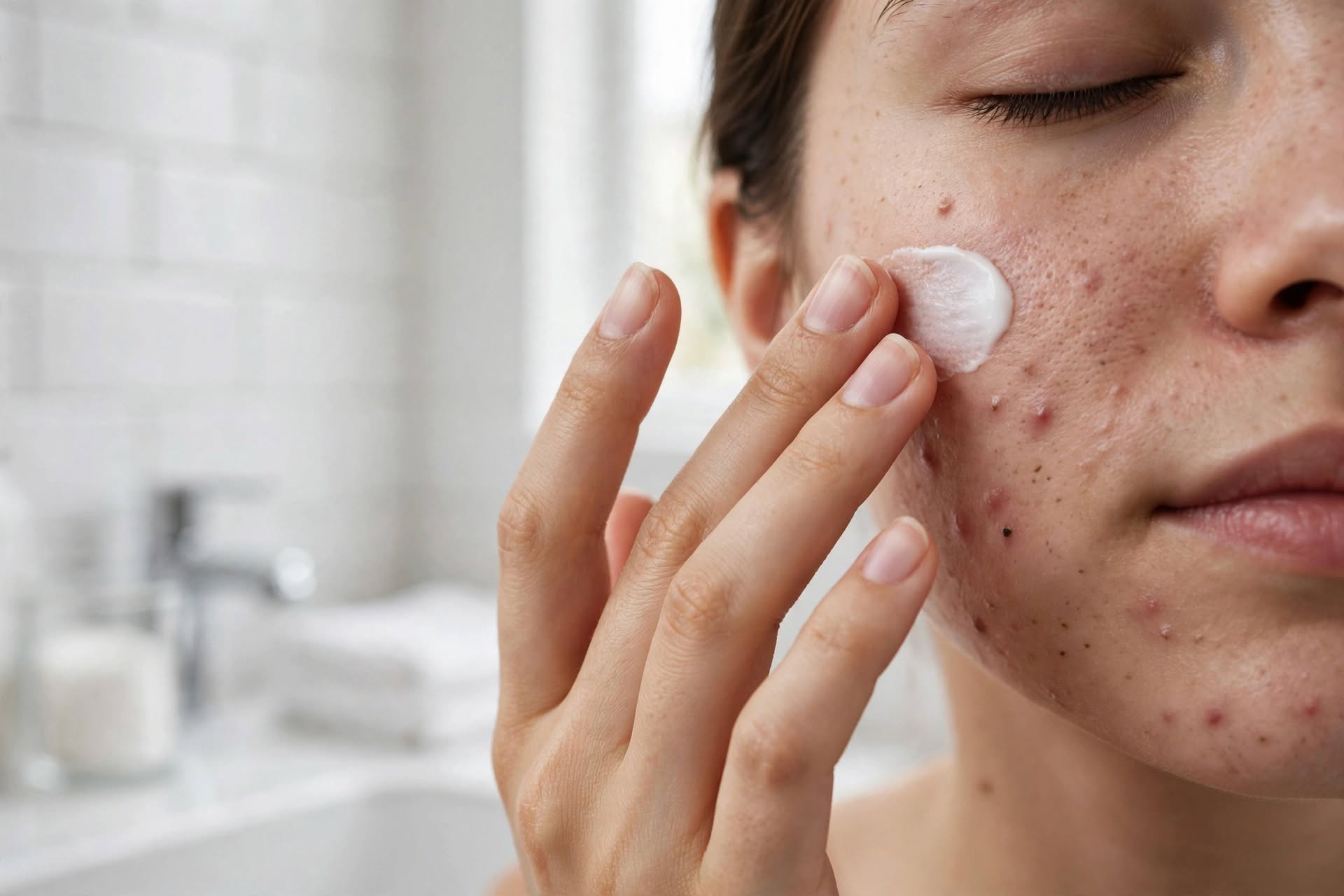
Acne starts inside the hair follicle, where excess oil, blocked pores, skin bacteria and inflammation combine, so it isn't caused by poor hygiene.[4] Diet plays a smaller part than most people think: high-glycaemic diets and milk are linked with moderately worse acne, but there's no good evidence chocolate causes it.[5] Effective treatments exist for every level of severity, and a GP can start most of them.
Acne myths are everywhere. Wash more. Quit chocolate. Let the sun dry it out. Acne is one of the most common skin conditions on earth, affecting about 9% of people worldwide and roughly 85% of people aged 12 to 24,[1][2] yet it still comes with a lot of blame and bad advice. If you've been told your skin would clear up if you just washed your face more, this one's for you.
Numbers at a glance
What this guide covers
The biology
What happens in the follicle
Myths vs facts
Hygiene, diet, sun, picking
The emotional toll
Mood and confidence
What works
Treatment by severity
Your GP
When to book, when to refer
What causes acne? What's actually happening in the skin
Four processes inside the hair follicleAcne develops in the hair follicle and its attached oil gland, together called the pilosebaceous unit.[4] Four things tend to happen together: the oil glands make too much sebum, often driven by hormones called androgens; dead skin cells don't shed properly and plug the pore; a normally harmless skin bacterium, Cutibacterium acnes, overgrows inside the blocked follicle; and the immune system reacts, which brings the redness, swelling and tenderness of an inflamed spot.[4]
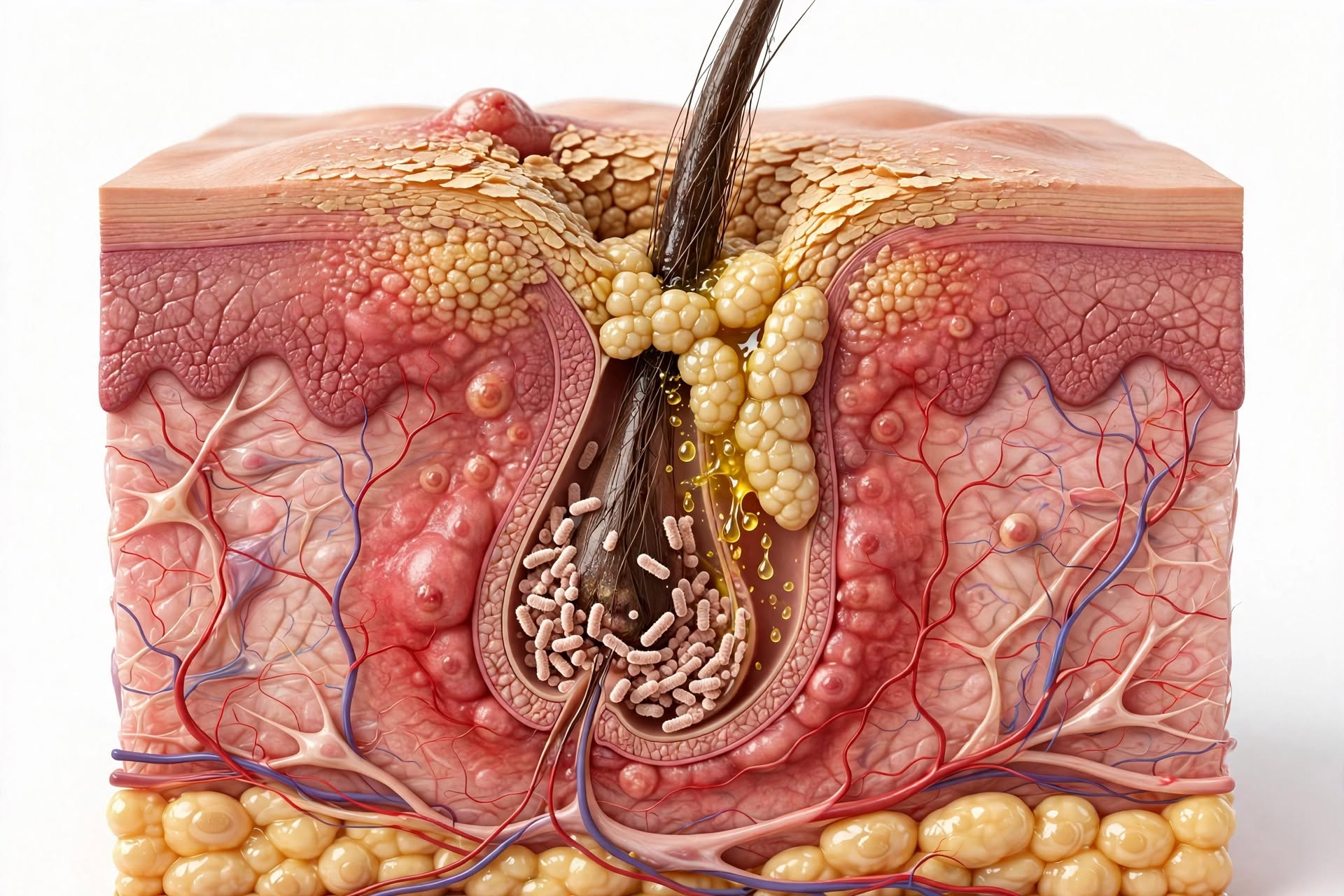
None of this happens because someone is dirty or careless. Genes carry a lot of the weight: a large systematic review found the heritability of acne is almost 80% in first-degree relatives, and acne tends to start earlier and be more severe when there's a family history.[5]
Key fact: Acne is an inflammatory condition of the follicle beneath the skin, not a surface dirt problem.[4][5]
This is general health information. Consult your GP.
Acne myths vs facts
What the evidence says about hygiene, diet, sun and pickingPlenty of acne advice gets passed around by people who've never studied it. Believing the wrong cause often leads to the wrong response, like harsh scrubbing or cutting out whole food groups, and it can delay treatment that actually helps.
| Myth | What the evidence says | Verdict |
|---|---|---|
| Acne comes from poor hygiene | Acne forms inside the follicle. Scrubbing and over-washing irritate skin and can make acne worse.[4][6] | Not supported |
| Chocolate and greasy food cause acne | No good evidence for chocolate. High-glycaemic diets and milk are linked to a modest link.[5] | Partly true |
| Acne is only a teenage problem | About half of people aged 20 to 29 are affected.[3] | Not supported |
| Popping pimples clears them faster | Picking, squeezing or popping can cause scarring.[6] | Not supported |
| Moisturiser and makeup always make acne worse | Products labelled oil-free or non-comedogenic are recommended as part of an acne routine.[6][10] | Not supported |
| Sun exposure clears acne | Too much sun can worsen scarring and dark marks.[6] | Not supported |
Diet, in more detail. A 2021 review found that people with acne who ate a low-glycaemic-load diet had fewer acne lesions than those on high-glycaemic-load diets.[5] Milk was also been studied. The whey proteins that drive milk's effect on insulin may matter more than its fat content, and a three-year study of more than 6,000 girls discussed in that review linked milk with acne but not chocolate.[5] The authors are clear that the studies have limitations. If you're thinking of changing your diet for your skin, a dietitian can help you do it without missing out on nutrients.
Adult acne. A systematic review found acne persists into the 20s in about 64% of people and into the 30s in about 43%.[3]
Most important: Scrubbing harder won't fix acne and can irritate the skin further.[6] A gentle cleanser is enough.
This is general health information. Consult your GP.
The emotional weight of acne is real
Acne and mental health, confidence and quality of lifeAcne can leave permanent scars, and it's been associated with higher rates of anxiety and depression and with lower quality of life and self-image.[7] A 2026 systematic review pulling together the research on this found consistent harm to mental health and people's everyday functioning, including effects on self-esteem and feeling stigmatised.[8]
So feeling self-conscious, skipping social plans, or getting fed up after trying product after product isn't an overreaction. It's common, and it's a good reason to get proper treatment instead of waiting for acne to burn out. How acne affects your mood should shape how actively it's treated. Guidelines strongly recommend considering isotretinoin when acne causes significant psychosocial burden, not only when it's physically severe.[9]
Worth knowing: You can raise how acne is affecting your mood at the same GP visit. If you'd like extra support, our guide on when to see a psychologist may help.
This is general health information. Consult your GP.
Acne treatment: what actually works
Treatment is stepped up according to severityMost people don't need to jump straight to the strongest options. Treatment is layered by severity.
| Severity | Usual options | Evidence |
|---|---|---|
| Mild | Topical retinoids (such as adapalene or tretinoin), benzoyl peroxide, azelaic acid, or salicylic acid. Topical combinations rank among the most effective options for mild-to-moderate acne.[9] | Strong azelaic acid: conditional |
| Moderate | An oral antibiotic such as doxycycline, used together with a topical treatment rather than on its own.[9][11] For some women, hormonal options such as a combined oral contraceptive pill or spironolactone.[9] | Strong to conditional |
| Severe or scarring | Oral isotretinoin, the reference-standard treatment for severe acne and scarring.[9] It must not be taken during pregnancy.[9] | Strong |
| Other options | Chemical peels and blue/red light therapy for mild-to-moderate acne, and photodynamic therapy for moderate-to-severe acne. The evidence for these is less certain.[9] | Uncertain |
Everyday skincare still counts. Use a gentle cleanser, choose oil-free or non-comedogenic products, and avoid scrubbing, picking and squeezing.[6][10]
Give it time. The American Academy of Dermatology advises that if a treatment suits you, you should notice some improvement within 4 to 6 weeks, and a clearing plan can take 2 to 3 months or longer.[12] Stopping and switching too early is a common reason treatment seems not to work.
Key fact: First-line creams and gels work for many people, and stronger options are there if they don't.[9]
This is general health information. Consult your GP.
What a GP can do for acne, and when to book
Your first point of contact, not just a referral stepA GP is often the right place to start with acne. Your GP can work out the type and severity of your acne, start first-line topical treatment, prescribe oral antibiotics or hormonal options for moderate acne where they suit you, talk through contraception where it's relevant, and give you realistic timeframes. Your GP can also recognise when acne is severe, scarring or not responding, and refer you to a dermatologist to consider isotretinoin or other specialist treatment.
It's reasonable to try a pharmacy topical treatment first for mild acne. It's worth booking a GP appointment if your acne is:
- 1painful, or forming deep lumps
- 2leaving marks or scars
- 3covering a large area of your face, chest or back
- 4not improving after 2 to 3 months of consistent treatment
- 5affecting your mood, confidence, or willingness to go out
Remember: Acne that's leaving scars, or that's getting you down, is a reason to seek treatment sooner rather than later.[9]
This is general health information. Consult your GP.
The bottom line
Acne is common and it's driven by biology: hormones, oil glands, skin bacteria, inflammation and your genes. It isn't a sign of poor hygiene. Diet has a modest role at most, and the chocolate myth doesn't hold up.
Treatment should match the severity of your acne, and it takes weeks to show results. If your acne is painful, scarring, or wearing you down, you don't have to just live with it. Talk to your GP.