
Mon–Fri: 8:30AM–5:30PM | Sat: 8:30–11AM | Sun: 8:30AM–12:30PM
GP Clinic · Iluka WA 6028
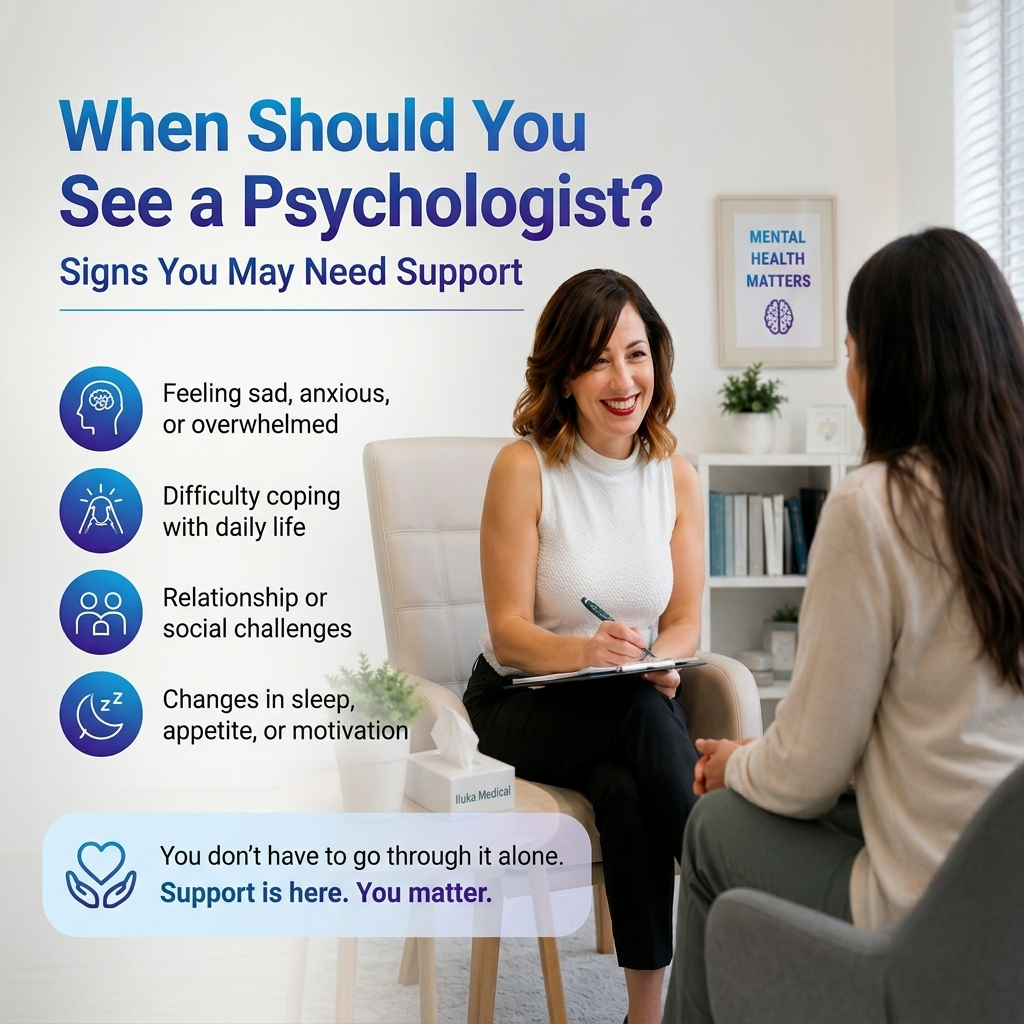
If you are experiencing stress, anxiety, low mood, grief or other emotional difficulties that persist for more than a few weeks, are affecting your daily life, relationships, work or sleep, or are becoming difficult to manage on your own, you should consider consulting a psychologist. You don’t need to be in crisis to book an appointment; early support is often the most effective kind.
If you’re unsure whether it’s the right time to seek support, this guide explains the signs to look for, how psychological therapy can help, and what to expect when seeing a psychologist in Perth.
A psychologist is an AHPRA-registered health professional trained to assess, understand and treat emotional, behavioural and mental health difficulties using talking therapies rather than medication.
While a psychiatrist, by contrast, is a medical doctor who can prescribe and manage medication, and a counsellor typically offers less formal, shorter-term support without the same diagnostic training.
Psychologists work with everyday stress and low mood as much as they do complex, long-standing conditions such as PTSD. Sessions are confidential and structured around your goals, not a generic script.
There’s no single “correct” moment to start therapy. The table below outlines common signs and what they may indicate. It’s intended as a helpful guide, not a diagnosis.
| Sign You Notice | Possible Mental Health Issue |
| Constant worry or racing thoughts | Possible anxiety symptoms |
| Persistent low mood or flat feeling | Possible low mood or depressive symptoms |
| Trouble sleeping or oversleeping | Stress, anxiety or mood disturbance |
| Irritability or snapping at loved ones | Emotional overload or burnout |
| Avoiding friends, work or social plans | Withdrawal linked to stress or low mood |
| Using alcohol or food to cope | Unhelpful coping strategies |
| Grief that isn’t easing over time | Complicated or prolonged grief |
| Relationship conflict that keeps repeating | Communication or attachment difficulties |
Emotional and behavioural signs often show up together: feeling overwhelmed by things that used to feel manageable; having a shorter fuse than usual; cancelling plans; procrastinating on tasks you’d normally handle; or leaning more heavily on alcohol, scrolling or comfort eating to switch off.
Physical symptoms are just as telling, since emotional strain often shows up in the body first: tension headaches, a tight chest or stomach, fatigue that sleep doesn’t fix, jaw clenching, or unexplained aches. Worth mentioning to your GP, so other causes can be ruled out first.
Life situations that commonly bring people to therapy include starting a new job, becoming a parent, separation or divorce, losing a loved one, burnout from a demanding job or study load, a new chronic illness diagnosis, or ongoing financial pressure.
You don’t need to be in crisis to see a psychologist. Many people book an appointment simply to understand a pattern better, work through a decision, or stop a habit before it takes hold, not because things have hit rock bottom.
If you’re asking yourself the question at all, that’s usually reason enough to raise it with your GP.
| Benefit | Example in Everyday Life |
| Reduced anxiety symptoms | Feeling calmer before a big presentation |
| Better sleep | Falling asleep without racing thoughts |
| Improved relationships | Fewer arguments that “come from nowhere” |
| Higher work performance | More focus, fewer sick days |
| Healthier coping strategies | Reaching for a walk instead of a drink |
| Greater self-awareness | Understanding why certain situations trigger a strong reaction |
Unlike venting to a friend, a psychologist offers a neutral, confidential space with no stake in the outcome and the coping strategies you build tend to outlast whatever issue originally brought you in.
Psychologists use evidence-based approaches that are specific to you, such as:
Focuses on unhelpful patterns of thought and replaces them with more balanced thoughts. Well researched for anxiety and low mood
Shows you how to lean into difficult emotions and take actions that are consistent with your values
Trauma-focused therapy: It will help you process painful past experiences at a pace you can handle
EMDR (Eye Movement Desensitisation and Reprocessing): A systematic approach is sometimes used for trauma-related symptoms.
Relationship Counselling: Better communication between partners or family members
Stress Relief: Practical strategies for managing workload, preventing burnout and creating a healthier work-life balance.
Many people delay seeing a psychologist because they think they should be able to deal with things themselves or because they are afraid of what other people will think if they ask for help.
People may also be put off seeking support due to concerns about the cost of therapy, finding time for appointments or thinking their problems are “not serious enough”.
But you don’t have to wait until you’re in a crisis. Getting help early can help you build healthy coping mechanisms, improve your wellbeing and prevent small challenges from becoming more difficult over time.
Disclaimer: If you or someone you know is in immediate danger or experiencing thoughts of self-harm, seek emergency medical assistance and contact an appropriate crisis support service immediately.
Our mental health counselling services at Iluka Medical Centre support people experiencing anxiety, stress, depression, grief, trauma, relationship challenges and other emotional wellbeing concerns. Support is available for anxiety, low mood and depression, grief and loss, relationship and family difficulties, trauma, and burnout or work-related stress.
Because psychology is provided on-site, your GP can prepare your Mental Health Treatment Plan and referral during one consultation, and your sessions happen under the same roof without the long waiting lists that often come with a new external provider.
| Service | Who It Helps | Main Benefit |
| Individual therapy | Anyone experiencing stress, anxiety or low mood | Personalised, one-on-one support |
| CBT-based sessions | People with anxiety or repetitive negative thinking | Practical thought and behaviour strategies |
| Trauma-focused support | People affected by past distressing events | Structured, paced processing |
| Grief support | People coping with loss | Space to process without judgement |
| Relationship-focused counselling | Couples or family members in conflict | Improved communication |
| Stress and burnout support | Working professionals and students | Sustainable coping strategies |
Deciding when to see a psychologist doesn’t need to be complicated. If stress, anxiety, grief or a difficult life change is weighing on you more than usual, that’s reason enough to have a conversation.
Iluka Medical Centre makes the first step simple: book a GP appointment, discuss a mental health treatment plan, and access on-site psychology support without the usual wait.
If you’re looking for a psychologist in Perth, speaking with your GP at IMC is often the best first step. They can discuss your concerns and, if appropriate, prepare a mental health treatment plan and referral.
Yes. Psychologists support a wide range of concerns, including everyday stress, life transitions and relationship issues, not only diagnosed conditions.
This varies by person. Under Medicare’s Better Access initiative, an initial referral covers up to 6 sessions with your GP in Perth, reviewing progress before referring for further sessions, up to 10 rebated sessions per calendar year.
Registered psychologists are trained to assess and diagnose many mental health conditions, working alongside your GP in Perth, where medication or specialist input is needed.
Call (08) 6119 4700 or book online to see a GP first, who can arrange your Mental Health Treatment Plan and on-site psychology referral.