
What Is "Cheap Dopamine"?
The slot-machine architecture built into your feed
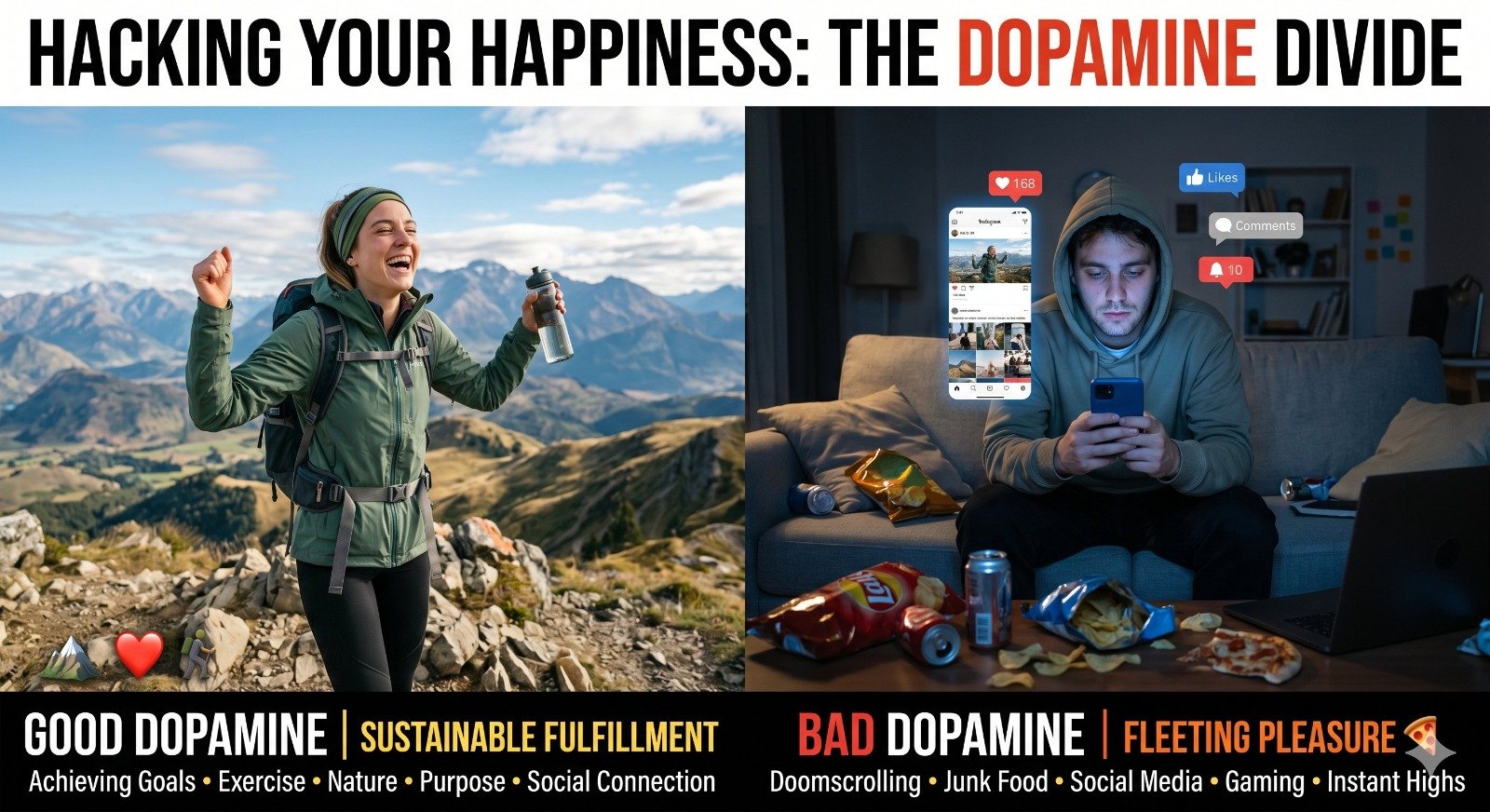
"Cheap dopamine" describes rapid, low-effort dopamine spikes produced by passive activities — scrolling social media, receiving likes, watching short-form video — as opposed to the sustained signal generated by effortful, meaningful work. The "cheap" label isn't moral; it's neurological shorthand for a spike that costs the brain little in effort but extracts a significant toll in downstream wellbeing.
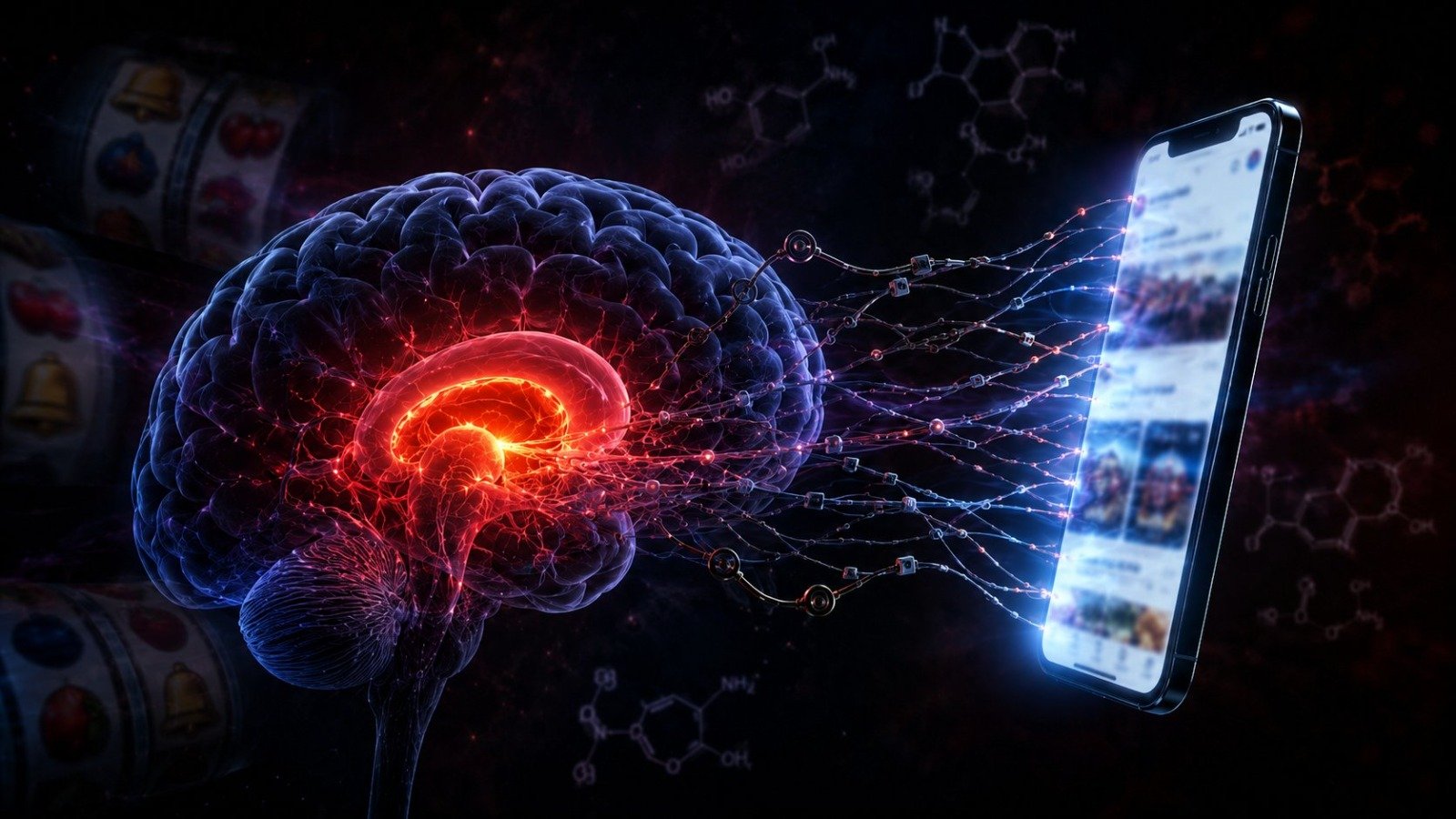
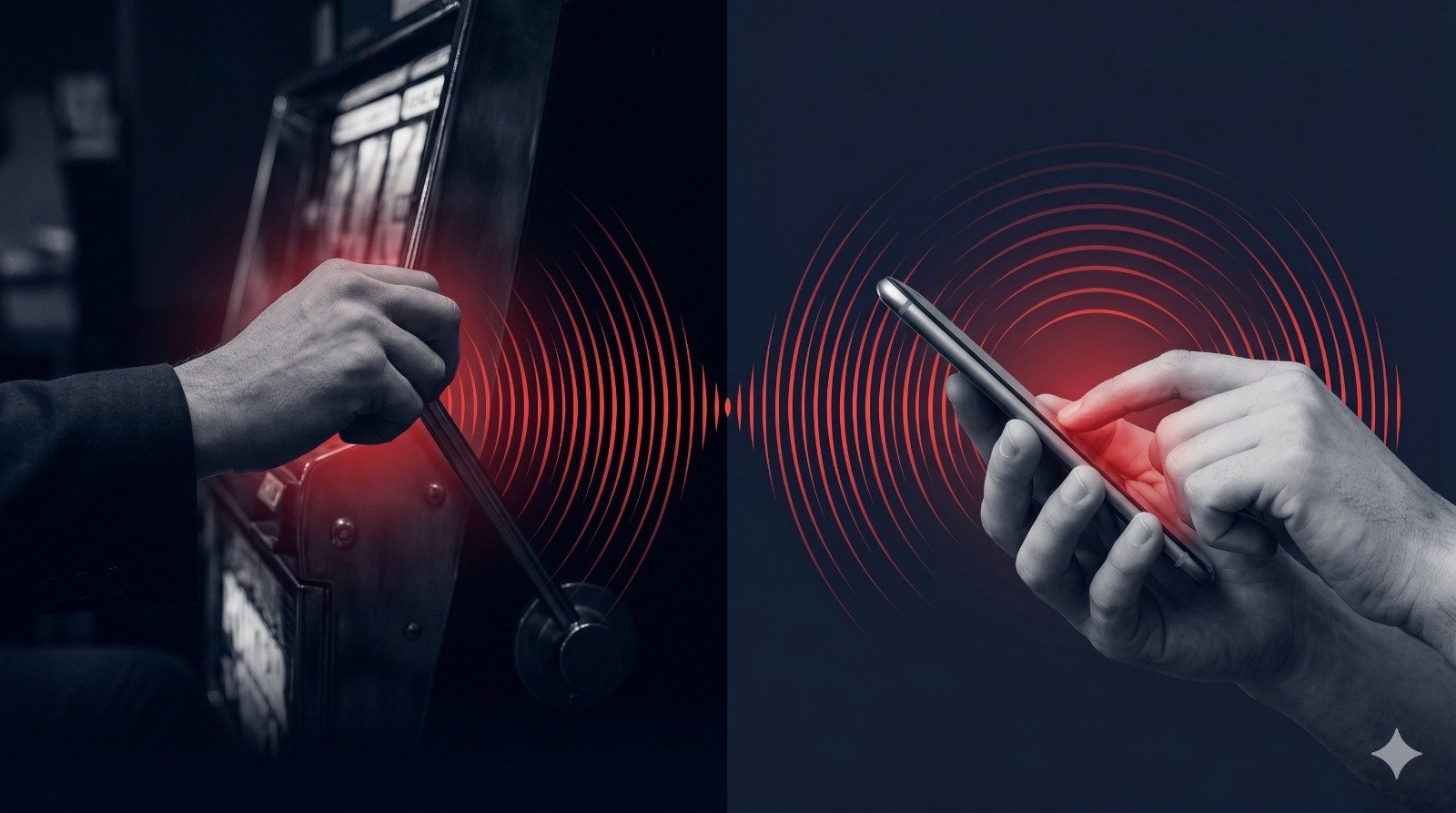
Social media platforms are engineered around the variable reward schedule — the same reinforcement pattern used by poker machines. Neuroscientists confirm this is the most powerful compulsion driver known: the unpredictability of the next reward makes the dopamine response more compelling than any predictable pattern.
A peer-reviewed study in Cureus (2025) confirmed that likes and comments activate the ventral striatum — a region dense with dopamine receptors involved in reward anticipation — and that TikTok's algorithm specifically causes dopamine spikes when unexpected content types appear in rapid succession.
What It Does to Your Brain
Tolerance, baseline depletion, and neuroimaging evidence
Repeated high-frequency, low-effort dopamine spikes trigger a well-understood adaptation: the brain recalibrates its reward threshold upward. What once felt exciting becomes the new normal. The consequence is that ordinary life — a meal, a conversation, a walk outside — loses neurological colour, because the dopamine system is now calibrated to a much higher stimulation level than reality can provide.

Research summarised from Dartmouth University captures the mechanism precisely: over time, the abundant release of dopamine from social media use creates a deficit — users experience less pleasure when not using social media because their dopamine levels fall below their original baseline. This is the same process that underlies tolerance in substance use disorders.
Heavy social media users show decreased activity in brain regions responsible for self-control — the same regions that regulate impulsive behaviour in addiction. Critically, a meta-analysis found these changes appear reversible with deliberate behavioural intervention.
The Numbers Don't Lie
Population-level evidence, 2024–2026
Who Is Most Vulnerable?
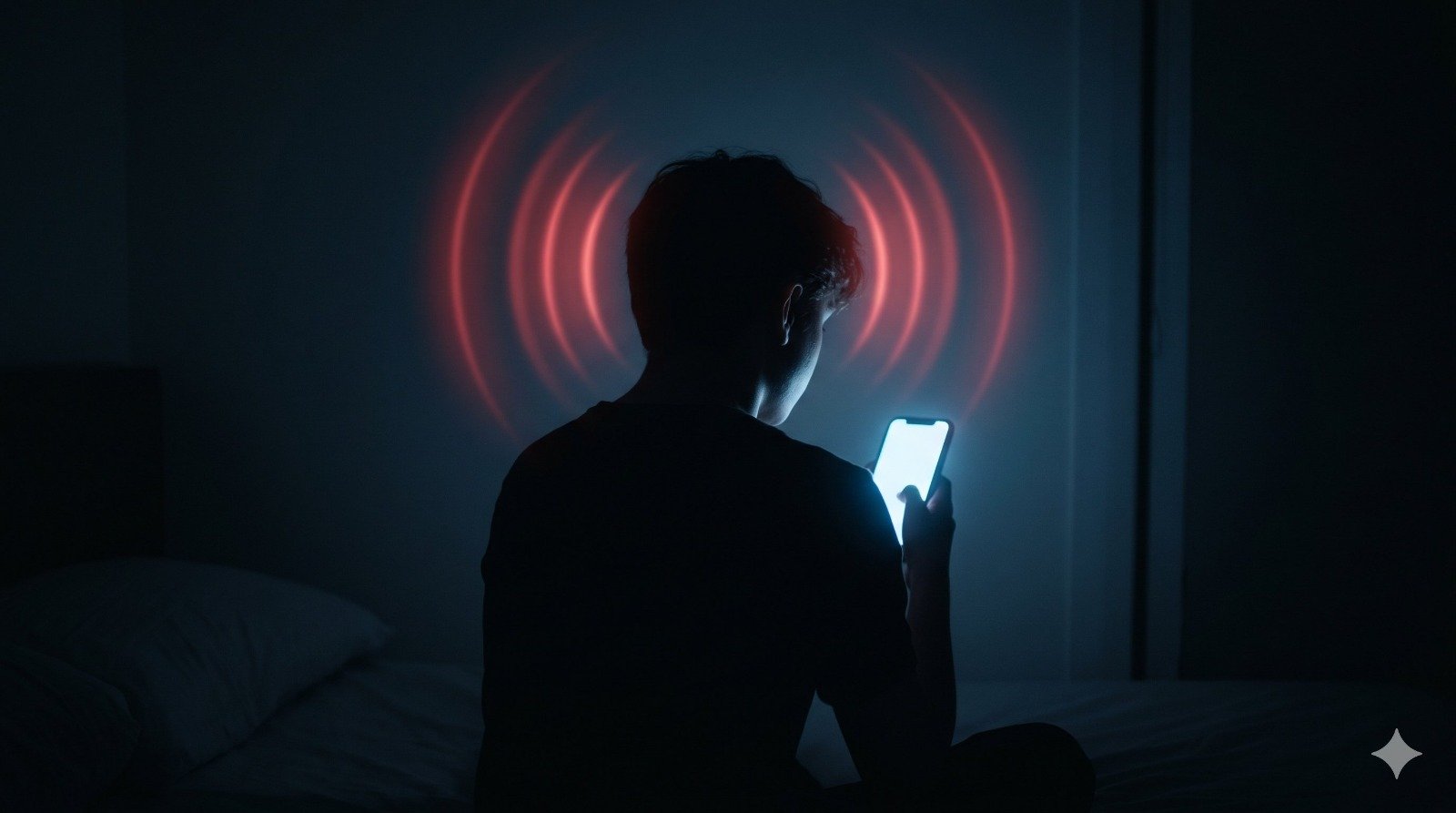
Teenagers' brains are still developing — especially the prefrontal cortex governing decision-making, emotional regulation, and impulse control. Social media is specifically designed to exploit this developmental window. Adolescent girls face measurably higher risks: repeated exposure to curated, idealised images activates social comparison circuits in ways that compound over time into chronic anxiety and low self-esteem.
The U.S. Surgeon General has formally stated that adolescents spending more than three hours daily on social media face twice the risk of depression and anxiety. Nearly one-third of adolescents are on screens past midnight. The consequences for sleep, learning, and emotional development are measurable and cumulative.
Recalibrating Your Reward System
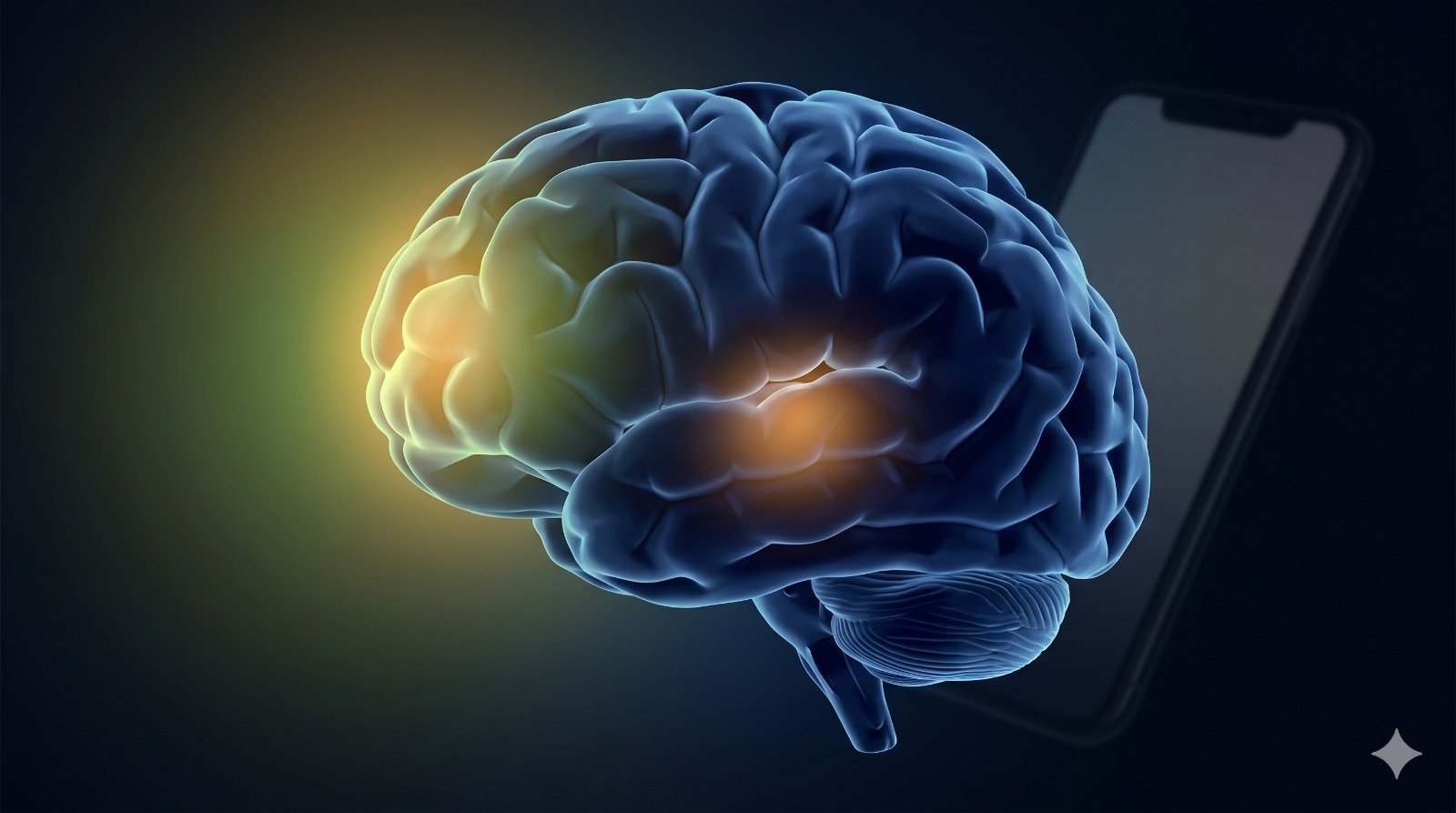
The most important finding in this literature is also the most hopeful: the neurological changes associated with heavy social media use appear reversible. The brain's neuroplasticity works in both directions. With deliberate, consistent changes to behaviour, the reward threshold recalibrates and ordinary life regains its neurological value.
Add friction: Log out after each use. Use grayscale mode. Keep your phone out of the bedroom. These structural changes remove the frictionless design companies use to maximise engagement.
Replace, don't just remove: The dopamine system needs reward — the goal is shifting from cheap to rich sources. Cooking, reading, exercise, creative work, and in-person social connection produce the kind of sustained, effort-based signal that builds rather than depletes neural wellbeing.
Set scheduled use windows rather than checking continuously — this removes the anticipatory loop that drives compulsive use and re-establishes intentional engagement.
🧠 The Bottom Line
Social media platforms are not passive tools. They are environments engineered by machine learning to maximise the dopamine-driven variable reward response — the same mechanism that keeps players at poker machines keeps fingers scrolling. The research is no longer ambiguous: excessive use is associated with depression, anxiety, sleep disruption, and measurable changes to reward-circuit neurophysiology.
None of this means social media is inherently toxic. It means the default settings favour the platform, not you. Thirty minutes of deliberate engagement is neurologically different from three hours of reflexive scrolling. Your brain is responding predictably to an environment it wasn't designed for.
The neuroplasticity that makes it vulnerable also makes it capable of recovery — with the right habits, the right support, and the right things to do instead.
Talk to your GP at Iluka Medical Centre if you're concerned about your own or your child's relationship with screens and mental health.