
Hair Loss in Men and Women: What Every Australian Should Know
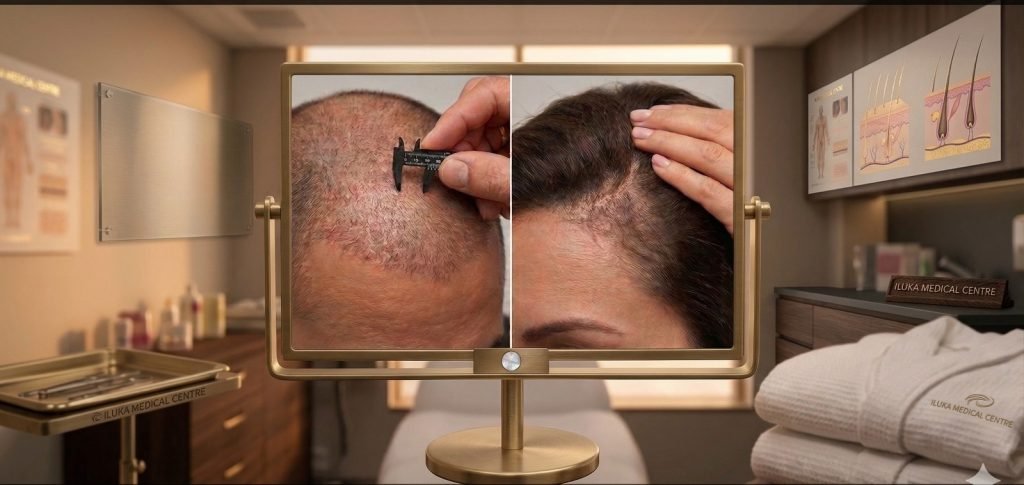
More than 80 million people worldwide experience hair loss — and in Australia, by your 50s there is roughly a 1-in-2 chance you are among them. Yet many people feel caught off guard when it happens, unsure whether it is normal, what is causing it, or whether anything can be done. The good news: hair loss is one of the most thoroughly researched conditions in dermatology, and effective options do exist.
How Common Is Hair Loss in Australia?
Pattern hair loss — the most common type — becomes more prevalent with age, but the figures differ significantly between men and women.
| Group | Prevalence |
|---|---|
| Men by their 50s | ~50% experience pattern hair loss |
| Women in their 20s–30s | 3–12% |
| Women over 70 | Up to 56% |
| Asian women over 70 | 12–25% (lower rates observed) |
Men and Women Lose Hair Differently
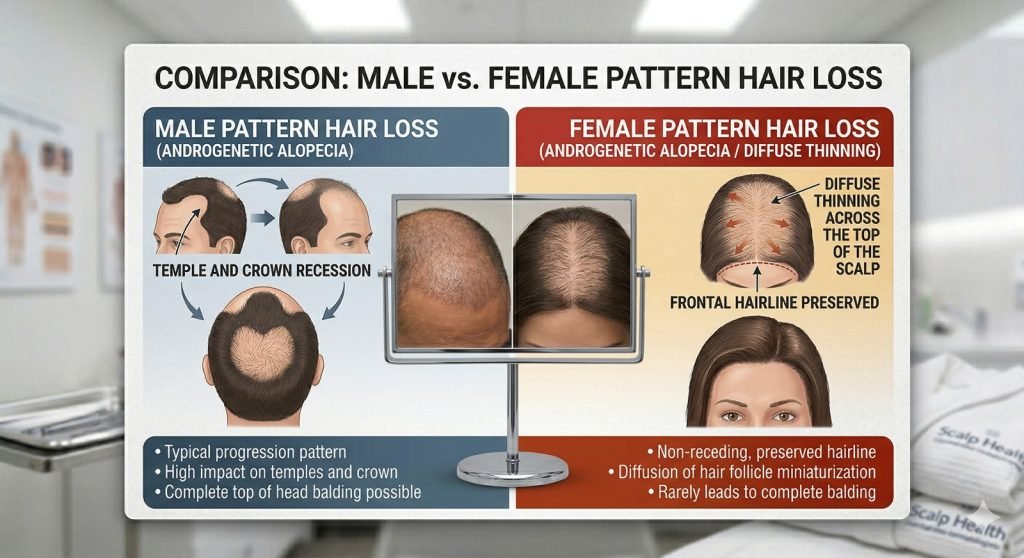
The pattern of hair loss follows distinctly different paths depending on sex:
- Men typically experience recession at the temples and thinning at the crown, sometimes progressing to more extensive baldness — though hair at the back and sides is usually retained.
- Women most commonly develop diffuse thinning across the top of the scalp while maintaining the frontal hairline. Complete baldness is rare in women.
What is actually happening in both cases is follicle miniaturisation — not follicle death. Hair follicles shrink progressively, producing finer, shorter, lighter strands, and the active growth phase shortens so hairs never reach their previous length. This matters because miniaturised follicles can often still be stimulated — particularly with early treatment.
What Causes Hair Loss?
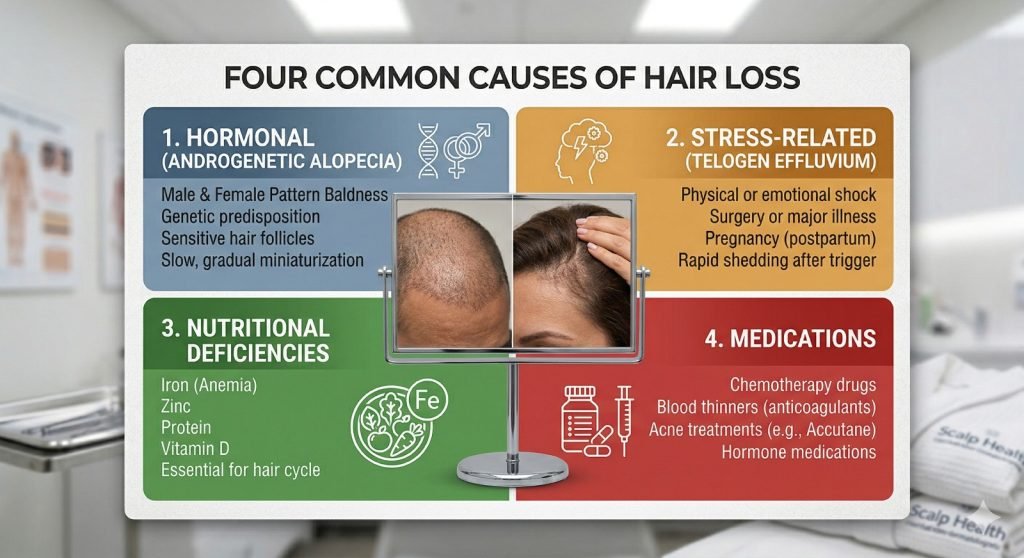
Hormones (androgenetic alopecia)
In men, pattern hair loss is closely linked to dihydrotestosterone (DHT), a potent derivative of testosterone that causes follicle miniaturisation. In women, the picture is more complex — many women with pattern hair loss have completely normal hormone levels, and the condition can occur even without elevated androgens.
Stress and illness (telogen effluvium)
Major physical or emotional stress — including severe illness, childbirth, or surgery — can push hair follicles into a resting phase, triggering increased shedding 2–4 months after the trigger event. This is called telogen effluvium. The reassuring news is that it is usually temporary, with most people seeing regrowth within 6–9 months once the underlying cause is addressed.
Nutritional deficiencies
Low levels of vitamin D, iron, zinc, or B vitamins can contribute to hair thinning. Supplementation helps most when a genuine deficiency exists — a blood test can confirm this. It is worth noting that excessive intake of vitamin A or selenium can paradoxically trigger hair loss.
Treatment Options With Evidence Behind Them
| Treatment | Who it may suit | Key considerations |
|---|---|---|
| Topical minoxidil | Men and women | Applied directly to the scalp; prolongs the hair growth phase. 5% strength may be more effective than 2% in men. Must be used continuously — stopping reverses gains within months. |
| Oral finasteride | Men (not for women of childbearing age) | Daily tablet that blocks DHT conversion. May be effective at halting loss and supporting regrowth. |
| Low-level laser therapy | Men and women | Handheld devices used 15–30 minutes daily. Shows promise in early studies; more research is ongoing. |
| Oral minoxidil (low-dose) | Men and women | Emerging option with growing evidence; requires medical supervision and an individualised assessment. |
| PRP / microneedling | Men and women | Newer therapies with varying levels of evidence; typically performed by a specialist. |
An important note on timing: evidence consistently shows that earlier treatment produces better outcomes. Once follicles have been miniaturised for many years, they become progressively harder to revive. If you are noticing thinning, acting sooner rather than later is worthwhile.
When Should You See a GP?
Gradual, symmetrical thinning is usually pattern hair loss and can be discussed at a routine appointment. However, speak to your GP promptly if you notice:
- Sudden or rapid hair loss
- Patchy or irregular bald spots
- Scalp redness, scaling, or itching alongside hair loss
- Hair loss following a new medication
- Significant emotional distress — this is a valid and important reason to seek support
These presentations may suggest other conditions — such as alopecia areata, scalp infections, or thyroid disorders — that respond to different, specific treatments.
Key Takeaways
- Hair loss is extremely common — affecting roughly 50% of men by their 50s and up to 56% of women over 70.
- Men and women experience different patterns of hair loss; complete baldness is rare in women.
- In pattern hair loss, follicles miniaturise rather than die — early treatment gives the best chance of response.
- Topical minoxidil is the most widely used evidence-based treatment for both men and women.
- Stress, nutritional deficiencies, and certain medications can cause temporary hair loss that may reverse once the cause is corrected.
- The emotional impact of hair loss is real and valid — your GP can help with both the physical and psychological aspects.
Frequently Asked Questions
Is hair loss hereditary?
Pattern hair loss has a strong genetic component and can be inherited from either parent's side of the family. However, genetics is not destiny — treatment can slow or halt progression regardless of family history, especially when started early.
How long does minoxidil take to work?
Most people need at least 3–6 months of consistent use before noticing visible improvement. Some experience a brief increase in shedding in the first few weeks — this is normal and usually temporary as the hair cycle resets.
Can women use finasteride for hair loss?
Finasteride is generally not recommended for women of childbearing age due to the risk of birth defects. It may be considered in some post-menopausal women under specialist guidance. Your GP can discuss the options best suited to your situation.
Will hair loss caused by stress grow back?
Telogen effluvium — hair loss triggered by stress, illness, or childbirth — is usually temporary. Most people see meaningful regrowth within 6–9 months once the trigger has passed, though in some cases recovery may take longer.
Disclaimer: This information is general in nature and is not a substitute for professional medical advice. Always consult your GP before making changes to your health management. Iluka Medical Centre — caring for your health.
Concerned About Hair Loss?
Our GPs at Iluka Medical Centre can assess the type and cause of your hair loss and discuss treatment options tailored to you.
Book an Appointment