
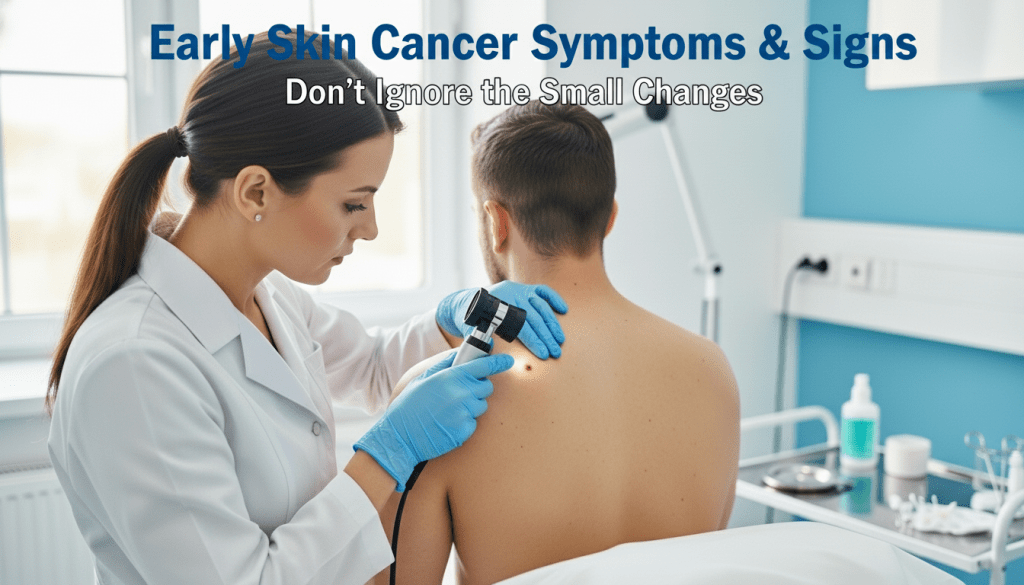
Spotted a new mole or a freckle that seems darker than before? And when you searched, google called it as one of the skin cancer symptoms. So, now you are sitting in a constant worry and confusion.
We hear this concern a lot, especially in Australia, where sunshine makes the skin vulnerable. So, the spot on your skin can be a harmless sunburn. But it also can be one of the early signs of skin cancer. You just have to keep your calm and identify the difference.
At Iluka Medical Centre, we’ve seen countless people with questions, fears, and photos of changing moles. So, we understand how stressful this uncertainty can be.
In this blog post, we’ve listed all the signs and symptoms of skin cancer that will help in identification. So, you can easily do crucial skin and mole checks at home. And if you need, our experienced team of doctors can offer professional skin cancer checks also.
Let’s get started to find out what does skin cancer look like.
What is the Skin Cancer?
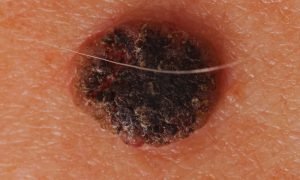
Skin cancer arises when skin cells grow abnormally due to genetic changes, and starts damaging your skin. It is triggered by ultraviolet (UV) radiation from sun exposure or tanning beds, and is mostly in exposed parts of the body.
These abnormal cells form a tumour, which can be benign (non-cancerous) or malignant (cancerous) that spread (metastasise) to healthy tissues.
In Australia, the burden of skin cancer is very high, because of our sun-intensive climate, particularly in Perth. Hence, skin cancers account for a large proportion of all newly diagnosed cancers, and the incidence is among the highest globally.
That’s why you should always keep a check on your skin and spot red flags early.
Skin Cancer Symptoms: What to Look Out For
Recognising the warning signs of skin cancer early impact the outcomes. Some of the most common symptoms include:
- A new spot on the skin or a growth that appears unexpectedly.
- Changes in an existing mole (in size, shape, colour or thickness).
- A sore or lesion that doesn’t heal within a few weeks.
- Redness, irritation, itching, or bleeding around a spot or mole.
- A lump that is pale, pearly, translucent or slightly raised in sun-exposed areas.
If your already present moles itch now, it is also a warning that a professional skin and mole check is required. But it doesn’t signalise cancer unless the proper diagnosis criteria is met.
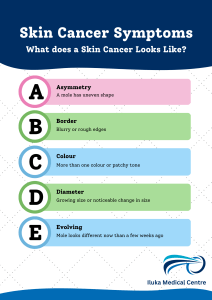
The ABCDE Rule: What Does Skin Cancer Look Like?
This rule gives an easy and quick method for identification of skin cancer symptoms.
| Signs of Identification | What it stands for | What to watch |
| A – Asymmetry | One half of the mole does not match the other | A mole has uneven shape |
| B – Border | The edges are irregular or poorly defined | Blurry or rough edges |
| C – Colour | Varied colours or unusual shades (brown, black, red, white, blue) | More than one colour or patchy tone |
| D – Diameter | Larger than about 6 mm (size of an eraser or skin colour pencil tip) | Growing size or noticeable change in size |
| E – Evolving | Any change over time in size, shape, elevation, or symptoms (itching, bleeding) | Mole looks different now than a few weeks ago |
If you notice any of these changes, or a combination of them, we advise booking a professional skin cancer check as early as possible.
Types of Skin Cancer & Their Symptoms
Now let’s discuss the common types of skin cancer and their specific symptoms.
| Type of Skin Cancer | Key Symptoms | Common Locations / Notes |
| Basal Cell Carcinoma (BCC) | Appears as a pearly or shiny bump, pale pink patch, or translucent lesion. Look like a sore that heals and returns, or a site that bleeds or scabs repeatedly. | Found on sun-exposed areas such as the face, ears, neck, and shoulders. Most common and least aggressive form of skin cancer. |
| Squamous Cell Carcinoma (SCC) | Appears as a firm red lump, scaly patch, or crusted sore. The lesion can bleed, crust, or ulcerate and feels tender. | Commonly develops on areas exposed to the sun, like face, hands, forearms, and lower legs. Grow into deeper layers or spread than BCC if left untreated. |
| Melanoma | The most serious form of skin cancer. Warning signs are rapid change in colour, size, or thickness, irregular borders, and unusual colours like white, blue, or black. Nodular melanoma symptoms appear within two weeks, with “puffiness” or raised texture. | Appear anywhere on the body, including under nails or inside the mouth (rarely). Can arise from an existing mole or develop as a new lesion. |
Given the potential severity of a face tumour or any suspicious lesion on the face (“tumour facial”), early professional review is needed.
Read More at: Skin Cancer Guide | Types, Prevention & Early Detection
Can Skin Cancer Be Prevented or Stopped at Early Stages?
Absolutely! Skin cancer is preventable if you keep a look on risk factors and protect yourself. Plus, you can also stop the spread of early stage skin cancer & get a better prognosis.
Preventive steps include:
- Avoiding excessive sun exposure and using broad-spectrum sunscreen regularly even on cloudy days.
- Wearing hats, sunglasses and protective clothing during peak UV hours (10 am to 3 pm).
- Avoiding tanning beds and artificial UV exposure.
- Monitoring your skin regularly for changes or new lesions.
- Seeing a GP for regular skin and mole checks if you have risk factors like fair skin, many moles, previous sunburns, or a family history of melanoma.
When skin cancer is detected in its earliest stage, treatment becomes simpler. A minor surgical removal of cancerous spot can improve the prognosis. For early melanoma, the five-year survival rate approaches 99 % if the cancer is thin and confined.
Cancer Screening: How to Detect Skin Cancer Early
When you book a cancer screening, your doctor can assist in:
- Offering professional skin examinations using dermatoscopy and clinical inspection of moles and lesions.
- Performing skin cancer checks for anyone concerned or at increased risk.
- Offering coordinated care with onsite pathology, which facilitates prompt biopsy and evaluation if required.
- Advising you on self-examination techniques and follow-up schedules.
Clinical research supports structured skin surveillance in high-risk individuals. E.g. total body photography, sequential digital dermoscopy and regular skin exams. This approach detected thin melanomas in a clinical study.
The Importance of Skin and Mole Checks
If we look at the risk factors of skin cancer, they include:
- Multiple moles
- Fair or freckled skin
- History of sunburns
- Prior skin cancers
Hence, existing moles can increase your likelihood of developing a cancer. And you’ll need regular skin and mole checks as a tool for skin cancer prevention and management
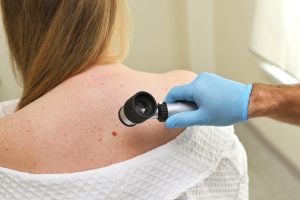
They allow the healthcare specialists to monitor the skin over time (comparing photographs, noting new spots, or changes in existing moles). Because, Your skin changes with time, sun-exposure and ageing. So, whenever a suspicious sign appears, it is detected immediately.
How to Perform a Self-Check at Home
Yup, you can play an active role and arrange regular skin and mole checks at home too. It will help in early detection of skin cancer symptoms and save you from serious trouble.
All you have to do is:
- In a well-lit room with a full-length mirror, undress and examine all skin areas including between toes, scalp, back of neck and soles.
- Use a handheld mirror or take photos of hard-to-see areas.
- Look out for new moles, changing moles (size, shape, colour), sores that heal then recur, lumps, and itching or bleeding spots.
- If you have a skin colour pencil or coloured marker, you can mark/measure the border of a suspicious spot, take picture and check in a few weeks for any growth.
- Note anything unusual (even if it seems harmless) like persistent change, growth or discomfort.
- Schedule a professional skin cancer check if you notice any red flags.
Screening of Skin Cancer at Iluka Medical Centre
At Iluka Medical Centre in Perth, we follow evidence-based medicine with a patient-centred, empathetic approach. If you have noticed a new spot or itching mole and suspect it as a face tumour, we encourage you to book a thorough skin and mole check with us.
Our services include:
- Skin biopsy and analysis for accurate diagnosis
- A Comprehensive head to toe skin examination.
- Personalised treatment plans & guidance for surgical options.
- Follow-up care & monitoring from our multidisciplinary team.
We are fully computerised, have onsite pathology and dedicated consulting rooms, and partner with allied health professionals to support holistic skin health.
Noticing Any Skin Cancer Symptoms?
Book Your Skin Cancer Check Before It Gets Late
Have you noticed a new mole, a lesion that’s changed in shape or colour? Our dedicated team at Iluka Medical Centre offers the expert care for your skin health.
Our facility is open 7 days a week, with easy access and free parking for your convenience. We offer bulk billing for eligible patients (pensioners, DVA, healthcare cards, children under 16) and reduced gap fees compared to urgent care centres.
You can get comprehensive skin cancer checks from our experienced doctors, with easy weekend appointments, onsite pathology and follow-up care.
Protect your skin now, before it gets too late.
FAQs
1. Can removing a mole cause cancer?
No, removing a mole cannot cause cancer. The removal is done to check if the mole was already abnormal or cancerous, not that the removal itself causes cancer.
2. Can moles itch or be irritated?
Yes, moles can itch or feel irritated, but this on its own doesn’t mean cancer. However, if itching comes with changes in size, colour or shape, you should get a professional check.
3. What are the 7 warning signs of skin cancer?
The seven warning signs include: new skin growth, a spot changing in size/shape/colour, non-healing sores, bleeding or crusting, itching or tenderness, rough patches and lumps that look different from other spots.
4. Is skin cancer treatable or not?
Yes, skin cancer is treatable, if caught on time. Many types have high cure rates if identified at an early stage.
5. What does stage 1 skin cancer look like?
Stage 1 skin cancer is localised to the skin and look like a new or changing mole with irregular border or colour, larger diameter, or a small lump different from surrounding skin.
6. What is the 2 week rule for skin cancer?
The “2-week rule” refers to guidelines in some health systems that suspected skin cancer cases should be seen by a specialist within two weeks of their appearance.
Disclaimer
The information provided on the Iluka Medical Centre website and blog is for general informational and educational purposes only. It is not a substitute for professional medical advice, diagnosis, or treatment.
While we make every effort to ensure the accuracy and timeliness of the content, Iluka Medical Centre does not guarantee that all information is complete, current, or error-free. Any reliance on the material provided is strictly at your own risk.
For personal medical concerns or decisions regarding your health, medications, or lifestyle, please consult a qualified healthcare professional.
Iluka Medical Centre accepts no responsibility for any loss, injury, or outcome resulting from the use of, or reliance on, the information presented on this website.